
Notable Baptists: Wiley Drake was a flamboyant SBC firebrand and grassroots small church champion

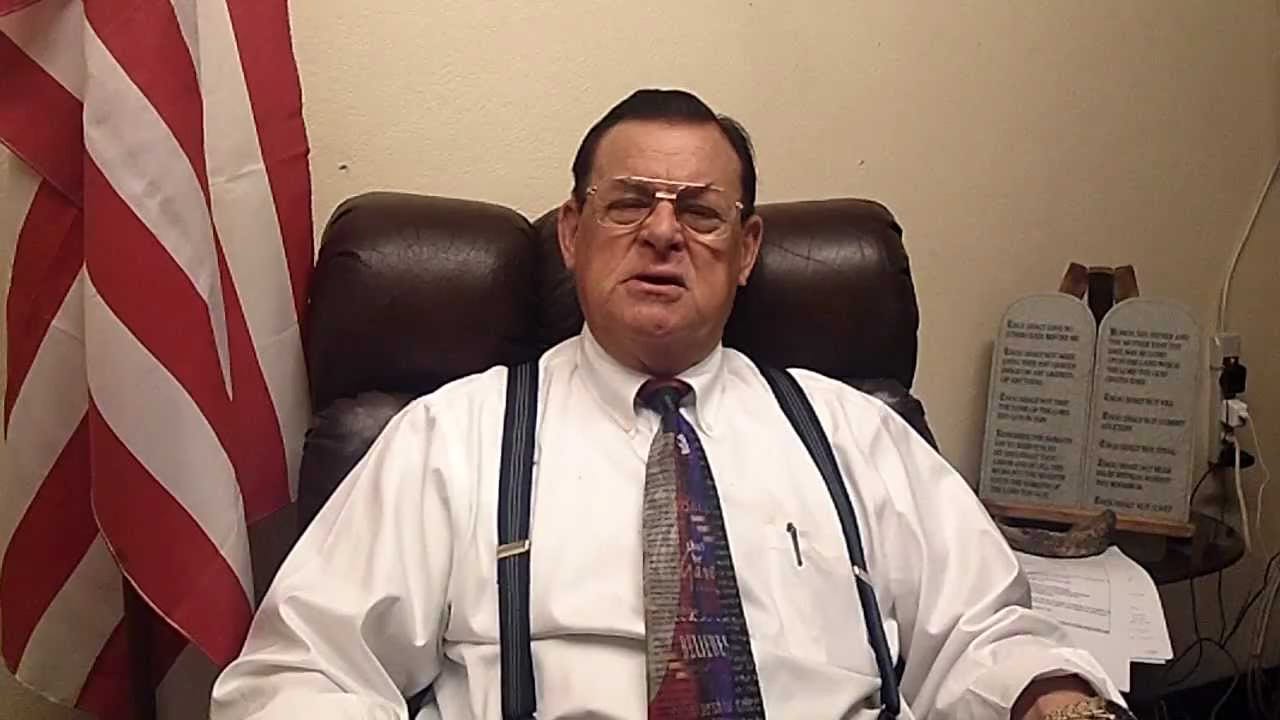
Wiley S. Drake Sr., a colorful and often unpredictable figure in Southern Baptist life whose microphone appearances became the stuff of convention lore, died Jan. 27 at age 82.
For more than three decades, Drake was a fixture at Southern Baptist Convention (SBC) annual meetings, speaking more than 70 times and earning a reputation as the messenger whose very name elicited cheers—or groans—from the floor. “Wiley Drake is the SBC,” Texas pastor and former SBC president Bart Barber once wrote, praising him as the kind of grassroots participant who, though never destined for the presidency, “gets involved” rather than “carping and complaining.”
A Flamboyant Presence in Baptist Life
Drake’s flamboyance was not merely stylistic; it was central to his identity. A self‑described “champion of the little guy,” he relished the populist energy of the convention floor and often used it to push bold, controversial, or unexpected motions. Messengers routinely wondered what he might propose next—an anticipation he cultivated with relish.
His most famous parliamentary moment came in the mid‑1990s, when he helped launch the SBC’s boycott of the Walt Disney Company. In 1996, he successfully amended a resolution to warn of a potential boycott if Disney continued what he called an “anti‑Christian and antifamily trend.” The next year, his submitted resolution became the basis for the official boycott.
Drake’s flair for the dramatic extended beyond denominational life. He twice ran for SBC president—once nominating himself—and later ventured into national politics, running for vice president in 2008 and for president in 2012 and 2016. His most memorable political moment for many Southern Baptists came in 2015, when he made a motion on the SBC floor asking then‑president Ronnie Floyd to run for president of the United States. The motion was ruled out of order, but it cemented Drake’s reputation as the convention’s most unpredictable showman.
A Pastor to the Marginalized
Behind the theatrics, Drake was also known locally as a tireless advocate for the homeless. As pastor of First Southern Baptist Church of Buena Park, Calif., for more than 25 years, he operated a shelter that housed up to 70 people per night and distributed 30,000 pounds of food monthly. “As long as I am pastor, we will provide shelter, food, and love to the homeless,” he told The New York Times during a 1997 legal battle with city officials.
His commitment to the marginalized was costly. He was convicted of violating building and property codes in 1997, and in 2017, the city condemned the church’s shelter. Still, he persisted, seeing the ministry as central to his calling.
A Life of Unconventional Turns
Drake’s life story was as unconventional as his public persona. Born Nov. 23, 1943, in Magnolia, Ark., he dropped out of school in the ninth grade to join the circus and rodeo. A bull‑riding injury ended that chapter, and he later served in the U.S. Navy, where he met his wife, Barbara, in Honolulu. He accepted Christ during a tour of duty in Vietnam and eventually graduated from Biola University and Southwestern Baptist Theological Seminary.
He pastored churches in Arkansas, Texas, and California, and after his wife, Barbara, died in 2010, he moved to Highland, Calif., and later to Levelland, Texas, to live with family. For many years, Drake hosted the “Wiley Drake Show” on crusaderadio.com (now defunct) from Visalia, Calif., that he proudly proclaimed was “internationally famous” and “heard around the world.”
Champion of Small‑Church Leaders
Drake’s populist instincts shaped his advocacy for small‑church pastors. After serving as SBC's second vice president in 2006–07, he moved that the convention cover “reasonable” travel expenses for officers, arguing that financial barriers kept small‑church leaders from serving. The SBC Executive Committee adopted the policy the following year.
Controversies
Drake’s career was not without turbulence. He received a cease‑and‑desist letter from the SBC Executive Committee in 2006 after endorsing a political candidate on SBC letterhead. He also became associated with the “birther” movement and publicly prayed imprecatory prayers against former President Barack Obama—stances that drew national criticism.
Sources: Baptist Press, Wikipedia, and Myers & Smith Funeral Home and Chapel obituary.